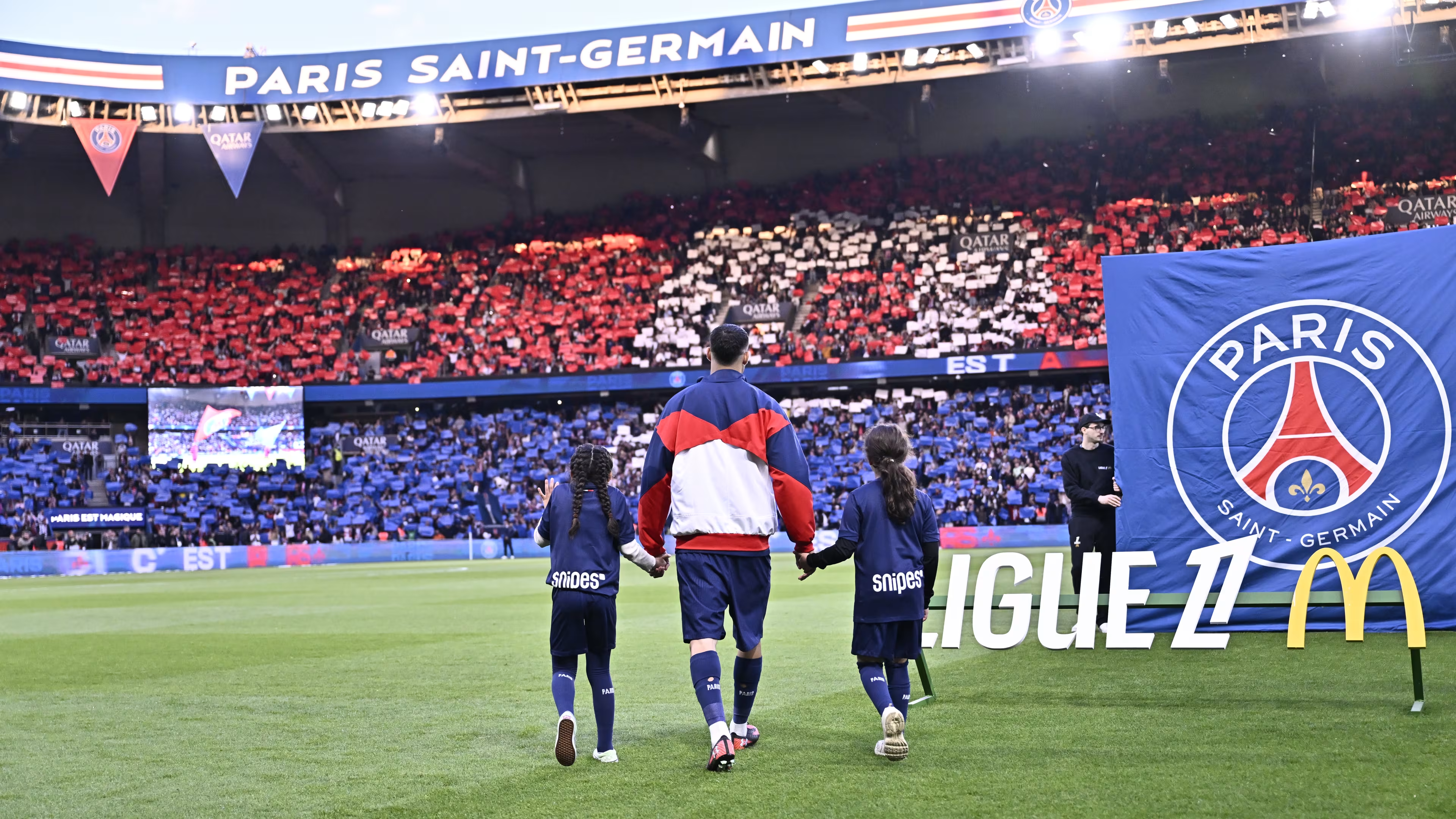
Les Rouge et Bleu will face Paris FC, the club which helped found Paris Saint-Germain Football Club in 1970. Let's take a look back at the beginnings of both clubs more than 50 years ago...
1969. No Parisian club, with the exception of Red Star based in Saint-Ouen, was playing in the top flight of the league. Worse still, since Racing merged with Sedan in 1966, there was no professional football in Paris. In February 1969, with the encouragement of the French Football Federation, Guy Crescent (CEO of the Calberson transport group) and Pierre-Etienne Guyot (former President of Racing) led a study committee for the creation of a new, big football team in Paris. A tenant had to be found for the new Parc des Princes, which was being rebuilt under the authority of architect Jean Tallibert. With the support of the sports press and following a public consultation (66,000 people supported this ambitious project), the Paris Football Club association was registered with the Paris Police Prefecture on 1 August 1969, with its statutes published in the Official Journal on 14 August 1969.
The P.F.C., without players, without a stadium, without even a football, was denied direct access to Division 1 and was forced to merge with Stade Sangermanois, which had just been promoted to the National Championship (formerly Division 2). The new club would be called ‘Paris Saint-Germain Football Club’.
On 10 June 1970, a protocol for the merger was drawn up, and on 17 June, the agreement was formalised.
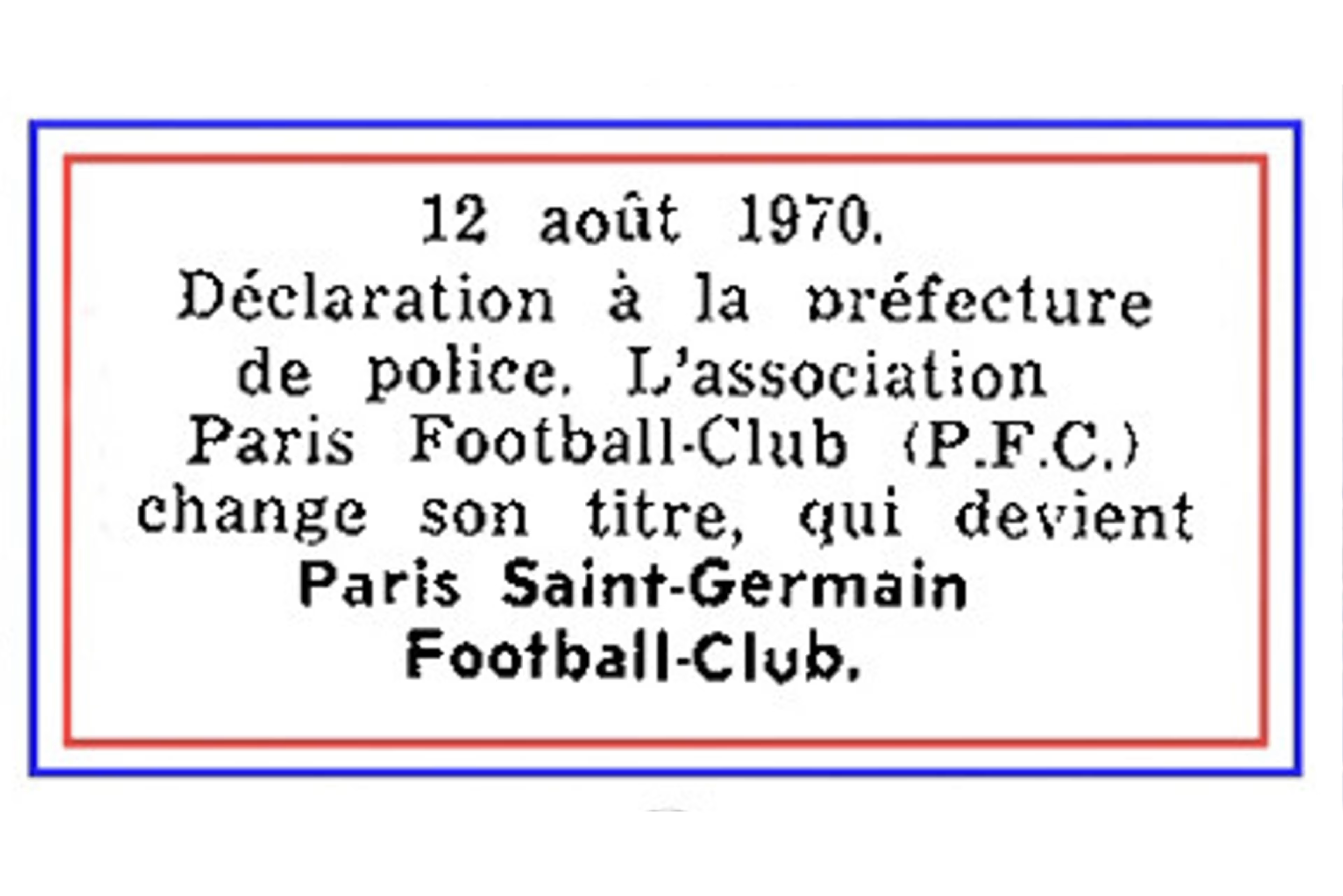
On 25 October, the Club's General Assembly, attended by 90% of the section delegates, adopted the final statutes of PSG, which was officially created on 27 August 1970, the day of publication in the official journal. Saint-Germain contributed its infrastructure, its Camp des Loges training centre and its amateur players (Guignedoux, Prost, Choquier).
The first season ended with resounding success: a National Championship title and promotion to the first division.
Paris Saint-Germain was about to experience a season of transition: work on the Parc des Princes stadium was behind schedule and would not be completed until May 1972. The city of Paris, which had made an annual subsidy conditional on promotion to Division 1, joined the club's board of directors. On 5 July 1971, the capital's elected representatives confirmed their financial support in a letter, but imposed a surprising condition: the club's name had to be changed back to its original name, ‘Paris-Football-Club’. A condition which divided the members.
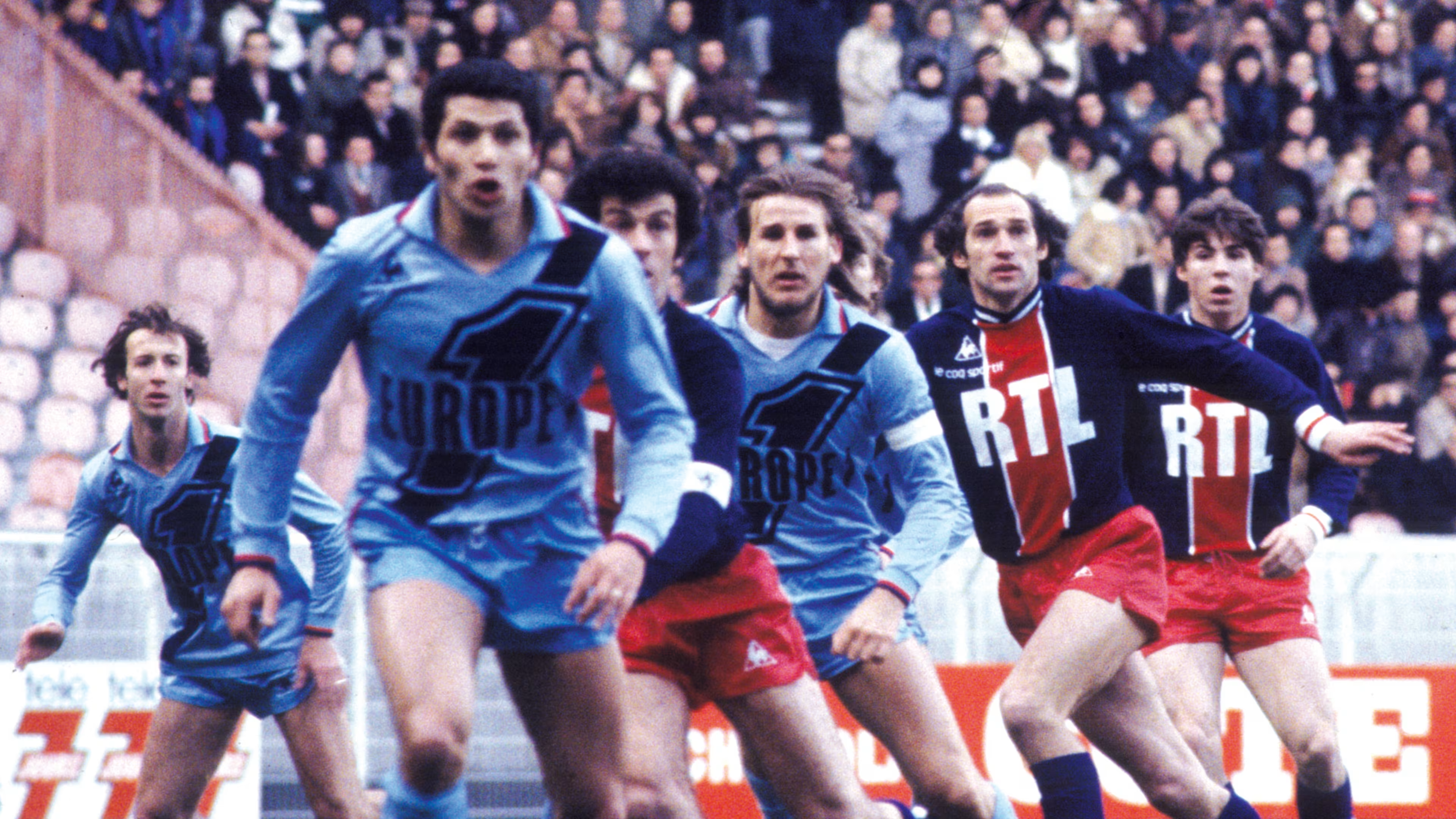
On 16 May 1972, the various protagonists of the club met at the Méridien hotel to attend the Ordinary General Meeting of Paris Saint-Germain, which, according to the statutes, was in a position to accept the proposal from the city of Paris. After several hours of discussion, each side remained firm in its position. The members were then consulted and asked to vote on the following question: ‘Do you accept the subsidy for 1971 and 1972 from the city of Paris, with the conditions attached to it?’ An initial vote gave a slight advantage to those in favour of ‘yes’. At that precise moment, PSG ceased to exist...
A few minutes later, this initial result was cancelled because the vote count was inaccurate. A new count gave the following result: 1,191 registered members, 939 votes cast. 623 members accepted the conditions set by the City of Paris, while 316 remained loyal to Paris Saint-Germain. However, a two-thirds majority was required to amend the club's statutes. The proposal to change the name fell just three votes short and, under these circumstances, was rejected. The two sides part ways with this new failure.
Paris Saint-Germain remained, but without the support of the Paris City Council and with the obligation to repay the first instalment voted by the Paris City Council. The operating deficit for the concurrent season amounted to around 100 million old francs. The 1972 subsidy would have made it possible to balance the books. Without the subsidy, Paris Saint-Germain would likely be forced to dissolve its professional section.
As separation already seemed inevitable, it was deemed better to separate the two entities than dissolve, and hence lose, both. On 25 May, the Paris-Saint-Germain board of directors adopted by a large majority (14 votes to 5) the proposals submitted by its operating committee: changing the club's name for its professional section to Paris FC and appointing a committee to study the terms of a definitive separation between the two clubs.
On 1 June 1972, a new chapter began when Paris F.C. merged with CA Montreuil, which became its amateur team training ground.
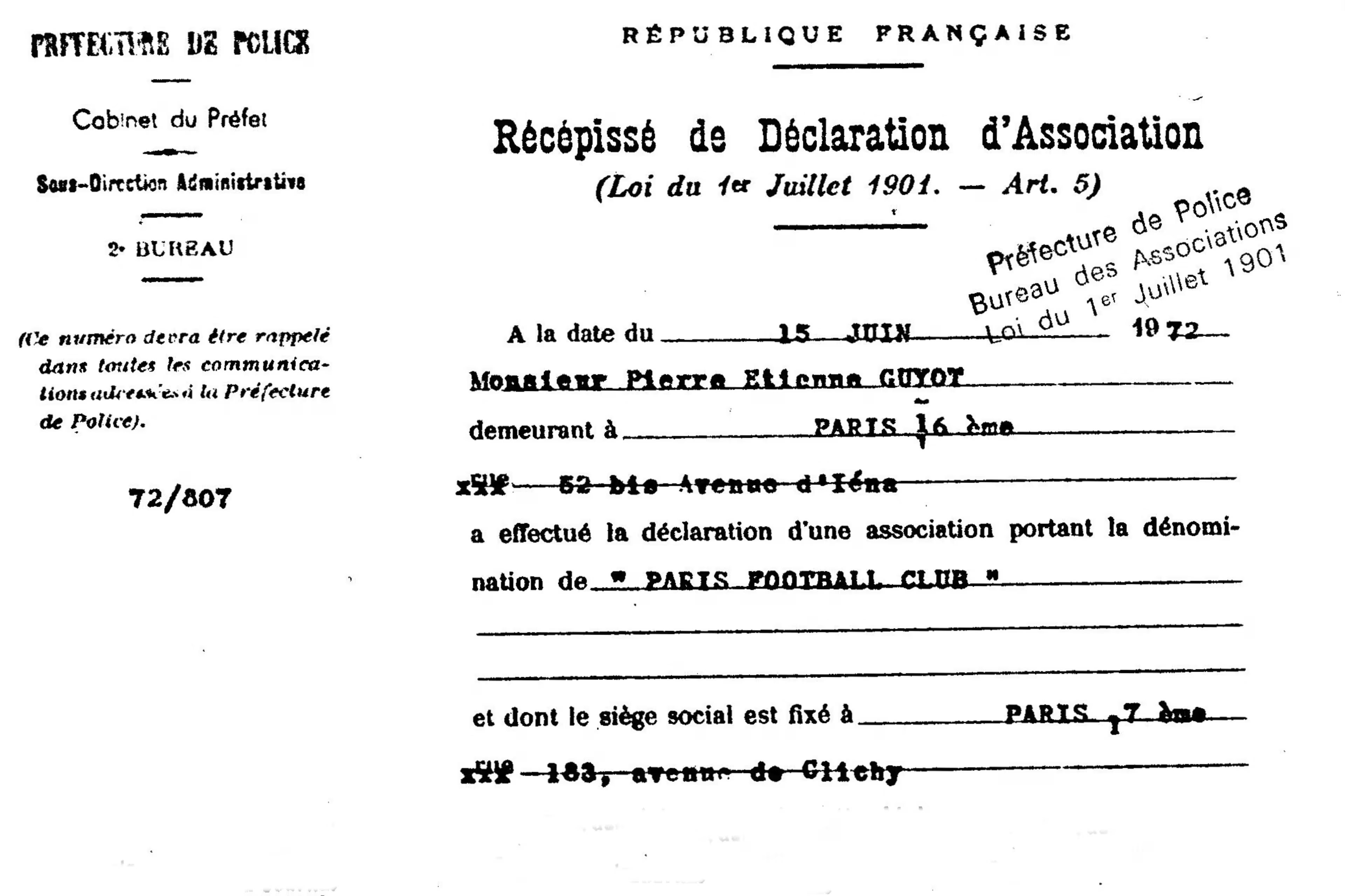
Paris Football Club filed new statutes in the Official Journal on 15 June 1972 under the name ‘Association Nouvelle Paris Football Club’ and five days later, 95% of the members accepted the merger.
From that date onwards, ‘Paris Football Club’, under that name, was no longer an association but a professional football club.
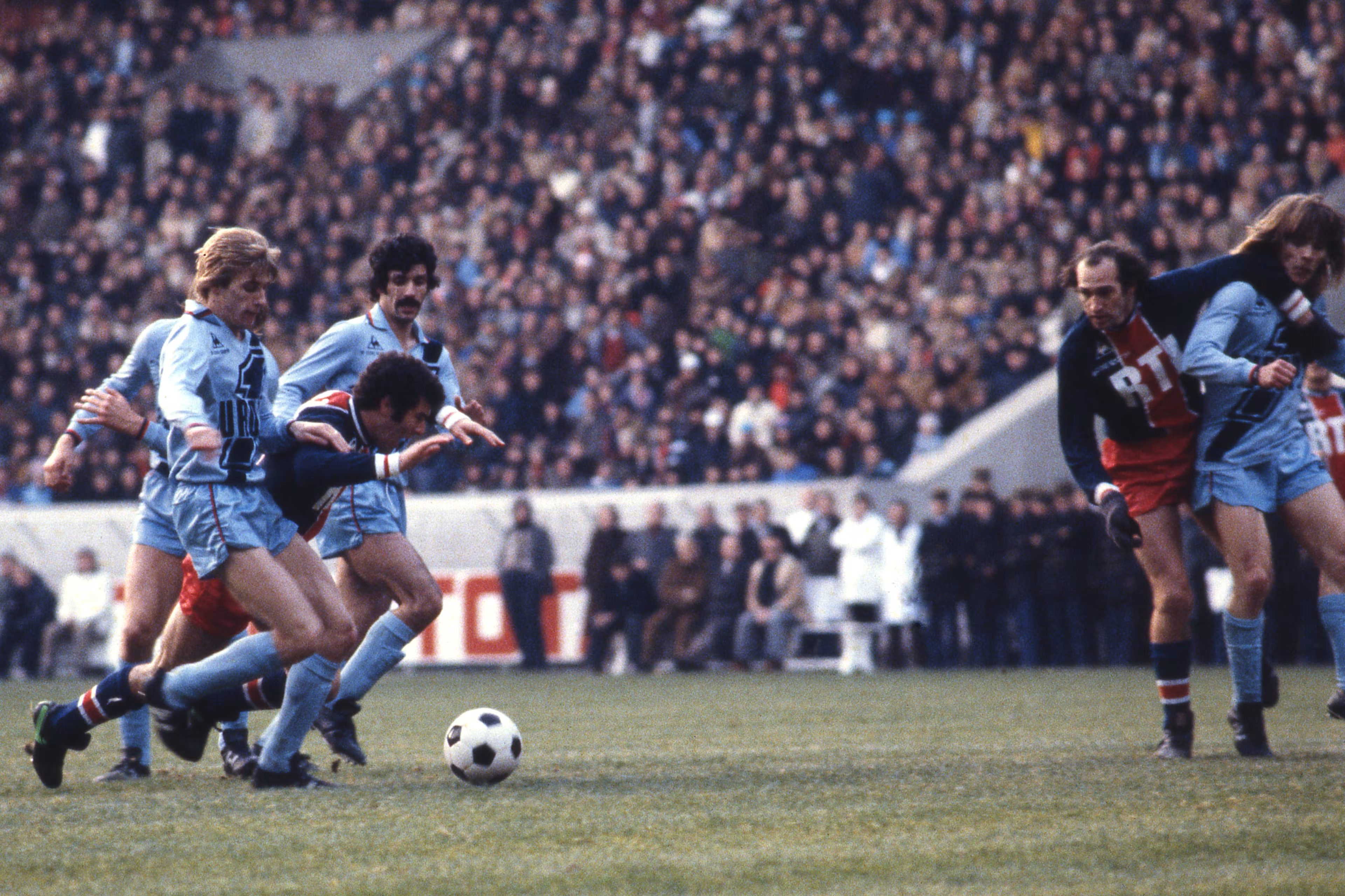
Paris Saint-Germain, for its part, kept its name and colours, its 500 amateur players (youth and women's categories) and returned to its birthplace, Saint-Germain. The club, which remained under the leadership of Henri Patrelle, was forced to rebuild a team with amateur players, as the best players had turned professional.
A year later, Daniel Hechter took over the club and in 1974, Paris Saint-Germain returned to the first division. Ironically, that same year, Paris FC was relegated.
From humble and tumultuous beginnings, Les Rouge et Bleu now sit at the summit of Europe, since the evening of 31 May 2025!